
THE PRACTICAL SALT GUIDE
Fill, adjust & use
a salt grinder.
A useful guide for dry coarse pink salt and compatible coarse sea salts. The mill’s own instructions decide which grains it can handle.
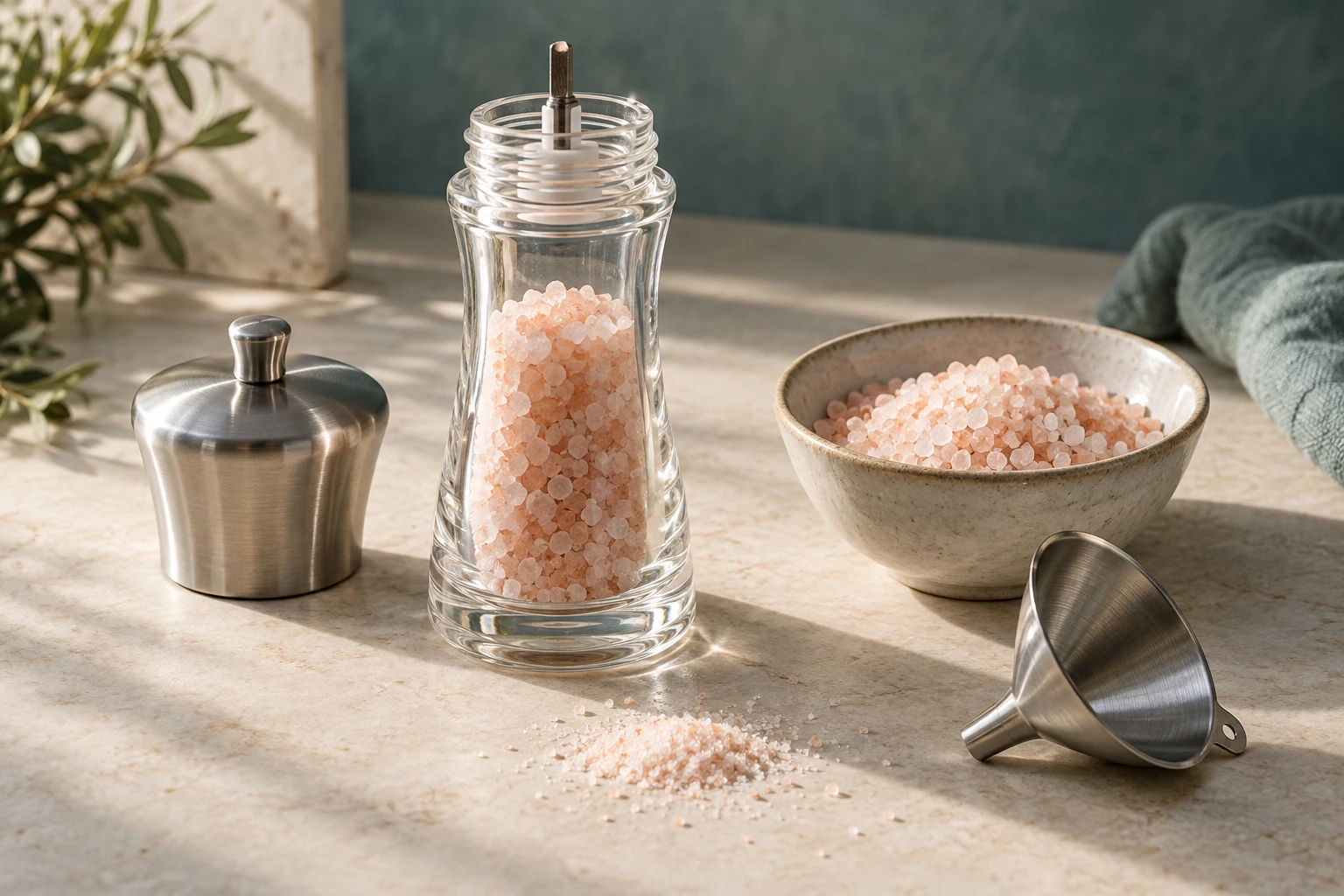
FOLLOW THE PROCESS
From crystals to seasoning

Check the salt
Read the mill’s requirements for grain size and moisture. Grey salts may require a specialist mechanism.
Fill with dry tools
Open the refill compartment, add compatible salt without overfilling and close securely.

Adjust, grind & taste
Test the grind on a plate, then season the food. Keep the mill away from steam.
Follow the detailed instructions below for quantities and timing.
What you need
- A mill specifically designed for salt
- Dry salt of a grain size approved for that mill
- A dry spoon or small funnel
- A clean plate to check the grind
Choose the right salt
Coarse pink salt can suit a dry-salt mill. Coarse sea salt needs the same compatibility check. Moist grey salts require a mill designed for their moisture and grain; do not assume a standard mechanism can handle them.
Step by step
- Read the mill instructions for suitable salt and crystal size.
- Open the refill compartment as directed. Keep the inside and refill tools dry.
- Add the approved salt without overfilling, then close the compartment.
- Adjust the grind following the manufacturer’s directions. Grind a little onto a clean plate to inspect the texture.
- Use a finer grind for even coverage of food; use a slightly coarser grind only when you want a little texture.
- Grind onto a spoon or plate away from steam, then season the food. Taste before adding more.
If the mill stops grinding
Check whether it is empty, overfilled or using an unsuitable grain. Follow the manufacturer’s clearing and cleaning instructions; do not force the mechanism or immerse it unless specifically permitted.
Try it in a recipe
Grilled corn with lime & pink salt →
Reference: Peugeot’s guidance on dry and wet salt mills. Requirements vary by mill.